Articles and Other Resources
Why Athletes Can Perform Better in Practice Than in Competition
A free throw is fifteen feet from the basket in an empty gym and fifteen feet from the basket with two seconds left in a tied game. The line itself is remarkably unconcerned with the score. The person standing behind it may be having a different experience.
The physical skill required to make the shot hasn't changed, but competition adds consequences that aren't present during an ordinary practice. A mistake may affect the score, influence how a coach evaluates the athlete, or happen in front of a crowd. Those possibilities can change where the athlete's attention goes at the exact moment they need access to a skill they've already developed.
Where Attention Goes Under Pressure
During practice, attention is usually connected to the task. The athlete sees the target, responds to the play, and makes an adjustment when something goes wrong. Competition can pull some of that attention toward the outcome or toward the athlete's own movements.
Research into choking under pressure tends to focus on two explanations. One involves distraction, where thoughts about the result compete with the task for attention. The other involves self-focus, where an athlete begins consciously supervising movements that normally happen with much less thought.
A study involving 201 participants used basketball free throws to examine performance under pressure. Greater anxiety was associated with more self-focus, while a stronger sense of control was associated with better performance. The study examined one task under laboratory pressure, and its results are consistent with something coaches and athletes regularly observe: thinking harder about a well-practiced movement doesn't necessarily improve it.
For some athletes, this becomes especially frustrating because they know what they're capable of doing. They have evidence from practice and previous performances, but that evidence may become difficult to use when their attention is divided between playing and evaluating themselves while they play.
Trying Harder Can Add Another Job
An athlete who responds to pressure by increasing effort may accidentally give themselves two jobs. They have to perform the skill while also monitoring the performance of the skill.
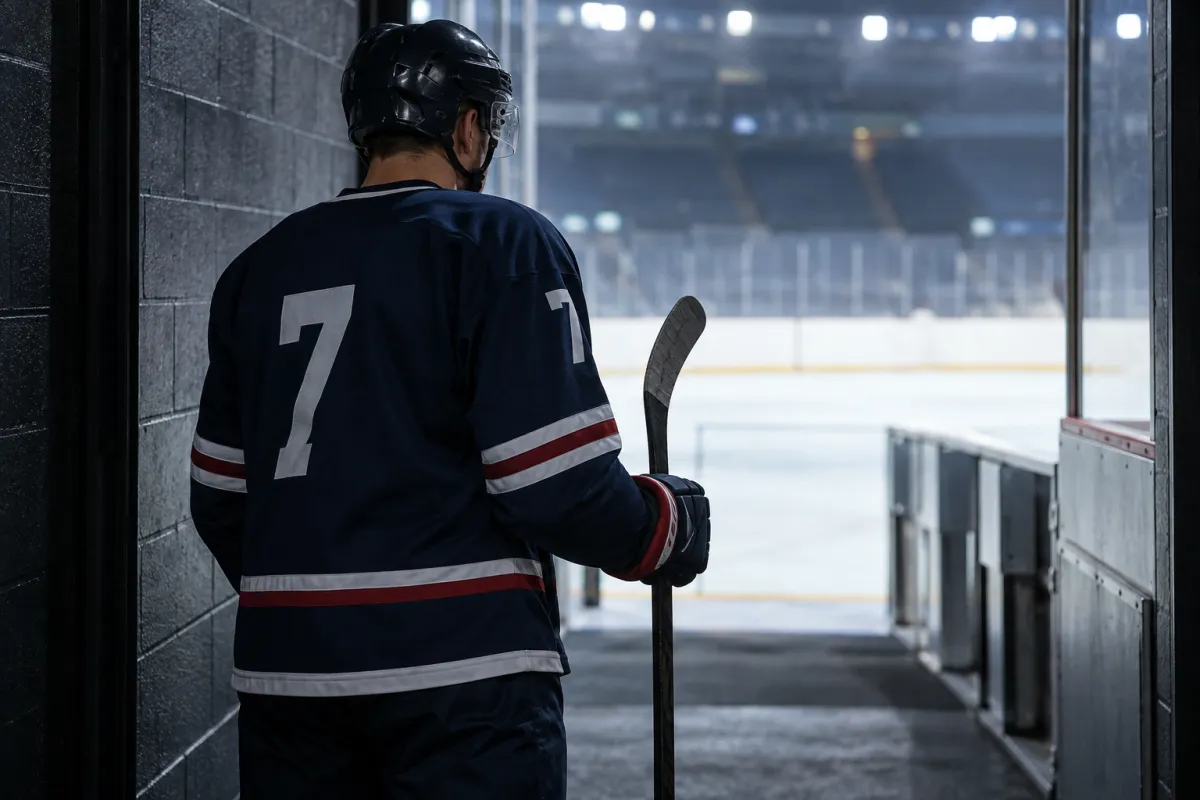
Consider a hockey player thinking through the position of their hands, the angle of the stick, and the mechanics of the shot after the puck is already moving. Those details were useful while learning. During a game, the play rarely waits for the athlete to finish thinking about them.
Technical correction belongs in training, particularly when the mechanics need work. When the skill is already reliable in practice, more instruction may give the conscious mind additional material to manage under pressure. The useful question becomes whether the athlete needs another correction or a better way to access what they already know how to do.
What Hypnosis Can Contribute
Hypnosis provides a structured way to direct attention and use expectation and imagery. In performance work, an athlete can mentally rehearse the conditions that tend to create pressure while practicing a more useful response to them.
That rehearsal can include the physical sensations of competition, the presence of an audience, or the possibility of making a mistake. The athlete can practice returning attention to a useful cue, allowing familiar movements to occur, and recovering from an error without continuing to rehearse it for the next several plays.
A 2024 study followed 19 elite downhill mountain-bike athletes who used a hypnosis audio intervention between two races. The athletes reported lower somatic anxiety and stress after the intervention, along with higher self-confidence. With 19 athletes and a nonrandomized design, the study offers preliminary rather than definitive evidence. It also provides a useful example of hypnosis being applied to the automatic responses that can change under competition pressure.
If an athlete's attention leaves the task when the pressure rises, we want to help them notice it sooner and return it to something useful. If one mistake tends to affect the next several attempts, we want to develop a shorter recovery process. If the body responds to competition with more tension than the activity requires, we can rehearse a different response.
Practice the Part That Changes
Athletes spend considerable time practicing the physical demands of their sport, but the conditions surrounding that practice may be very different from competition. Repetition in a familiar setting develops the skill. Pressure rehearsal helps prepare the athlete to use it when the setting changes.
Pressure rehearsal can be brief. A coach might add evaluation, a time limit, a consequence, or a single attempt that counts. Mental rehearsal can include similar elements without adding more physical repetitions.
A short reset can also be trained. Some athletes use a controlled breath, a word, or a physical cue that directs attention back to the next task. The cue has value because of the response practiced with it, rather than because the word itself has some unusual power. Yelling focus at yourself for the first time in the middle of a game is still yelling at yourself.
When the Skill Is Already There
Consistent practice performance suggests that the athlete may already have the physical ability to perform the skill and that competition is changing how that ability is accessed.
More practice may still be part of the answer, but it may leave the competition problem untouched if the added practice happens under the same comfortable conditions. Training attention and rehearsing the response to pressure address the part of the experience that actually changed.
If competition regularly feels like a different sport than practice, we should talk. Schedule a free consultation and we can look at what changes under pressure and how hypnosis may help.
References
Otten M. Choking vs. clutch performance: a study of sport performance under pressure. Journal of Sport & Exercise Psychology. 2009;31(5):583-601.
Hoffmann N, Strahler J, Schmidt B. Starting in your mental pole position: hypnosis helps elite downhill Mountainbike athletes to reach their optimal racing mindset. Frontiers in Psychology. 2024;15:1334288.

Driving Growth, Amplifying Impact
Pella T.

I had an incredible experience working with Tommy. After our first session together, I was really impressed by how comfortable and supported he made me feel throughout the process. His calm, professional approach made it easy to relax and really get the most out of the experience. Recently, I had the chance to work with him again at a fundraiser for my son’s graduating class, and it was just as powerful and positive as I remembered even being on stage! Tommy has a true gift, and I’m so grateful for the clarity and focus I gained from both experiences and definitely looking forward to working with him again. I highly recommend him to anyone considering hypnotherapy!
Gina H.
Tommy G, what an experience! You are talented, kind, trustworthy, and such a wonderful personality and good person all around. The event I attended was spectacular. I recommend you to all seeking hypnosis therapy or entertainment. You truly are a gem!
Jennifer R.
I was nervous going into my first hypnosis session, but Tommy made me feel completely at ease. The fact that he prayed with me before and after the session helped me feel supported and grounded. I didn’t know what to expect in terms of how I’d feel afterward, but the experience was incredible. Throughout the session, I remained focused and aware, even though I initially doubted my ability to do what Tommy was asking—mainly because stepping outside my comfort zone was new to me. However, I always felt safe and secure, knowing Tommy had my best interests at heart. I can’t recommend him enough. As an added bonus, he provides a recording of the session to listen to afterward, which serves as a powerful reminder that our insecurities don’t define us.
Abby H
Tommy is such an understanding, safe person. He's well spoken and truly cares about those that he is helping. I recommend him to anyone! This already has helped me SO much.
Unleash Your Ultimate Self.
Are you ready to be a champion?
Powered by Hypnobiz-in-a-box
© 2026 Like a Hypnotist, LLC - All Rights Reserved,