
Articles and Other Resources
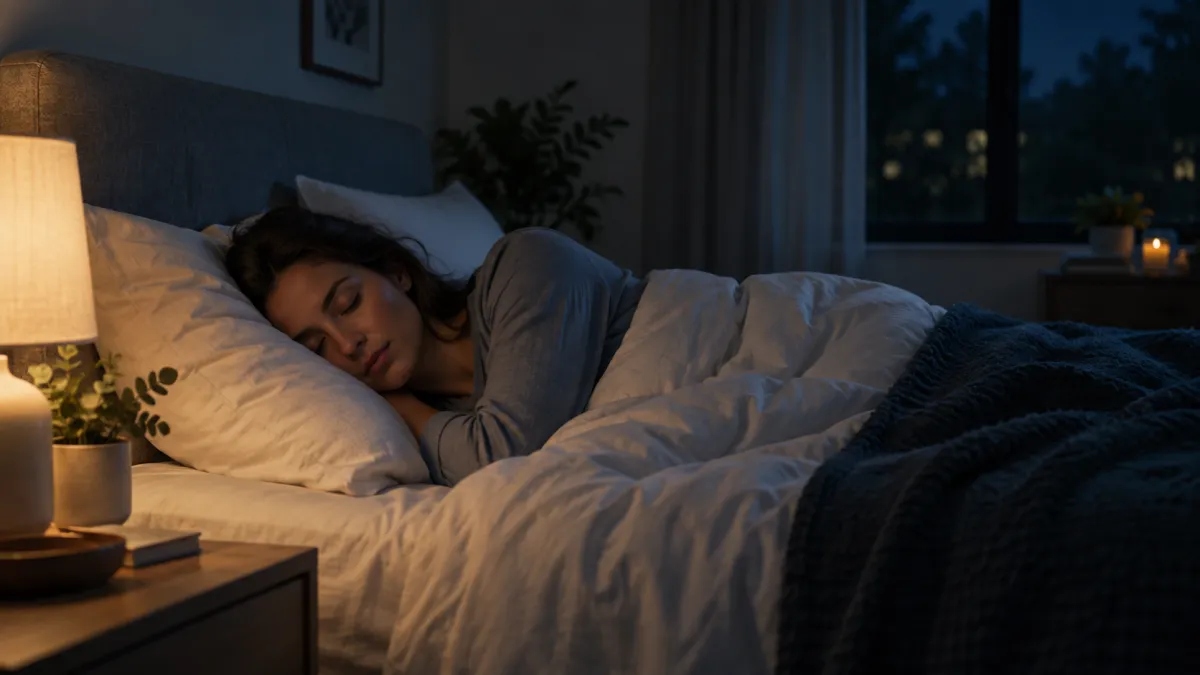
Hypnosis for Sleep: Can It Help With Insomnia?
Why can someone spend twenty minutes falling asleep on the couch, move ten feet to the bedroom, and suddenly become alert enough to review every unfinished conversation from the past twelve years?
Sleep is automatic, but trying to force it can make it harder. The more closely you monitor whether it is happening, the more attention you give to the fact that it has not happened yet. That can turn bedtime into a performance test, complete with a clock, a deadline, and an audience of one.
Hypnosis for sleep is intended to change that relationship with bedtime. It uses focused attention, guided imagery, expectation, and suggestion to help a person practice responses that are more compatible with sleep. The research is promising, although it is not strong enough to treat hypnosis as a universal answer or a replacement for appropriate medical care.
What Counts as Insomnia?
Insomnia can involve trouble falling asleep, trouble staying asleep, waking earlier than intended, or getting sleep that does not feel restorative. A bad night during a stressful week is different from chronic insomnia. The National Heart, Lung, and Blood Institute describes chronic insomnia as difficulty sleeping at least three nights a week for three months or longer when another health problem does not fully explain it (NHLBI).
That distinction is useful because sleep problems do not all have the same cause. Pain, medication, anxiety, an irregular schedule, menopause, sleep apnea, restless legs, and other conditions can produce similar complaints. Treating every tired person as though they simply need to relax is about as precise as fixing every dashboard light with the same wrench.
How Hypnosis for Sleep Is Supposed to Help
Hypnosis does not knock a person unconscious. A typical session involves narrowing attention, becoming absorbed in an experience, and responding to suggestions while remaining capable of hearing, thinking, and choosing. For sleep work, those suggestions may focus on physical settling, imagery, a less effortful response to intrusive thoughts, or cues associated with bedtime.
Expectation is part of the problem for many people with insomnia. After enough difficult nights, the bed itself can become a cue for alertness: What if I am awake again at two? How bad will tomorrow be? Trying harder adds another task at the exact time the brain needs fewer tasks.
Hypnosis can provide a structured way to rehearse a different response. Instead of arguing with every thought or checking the clock, a person can practice letting attention become narrower and less demanding. Repetition matters because one relaxed evening does not automatically rewrite a pattern that has been practiced for months.
That explanation is a practical model, not a claim that researchers have settled one universal mechanism for hypnosis or insomnia. People differ in hypnotic responsiveness, sleep problems differ in cause, and a method that helps one person may do little for another.
What Does the Research Say About Hypnosis and Sleep?
A 2023 systematic review examined 44 studies of hypnotherapy for sleep and sleep disturbance. About half reported positive results, while the rest reported mixed findings or no effect. Studies that specifically enrolled people with sleep disturbance and used sleep-focused suggestions tended to report more favorable results. The authors still called for better reporting, standardized measures, and stronger study designs (Wofford and colleagues, 2023).
An earlier review published in the Journal of Clinical Sleep Medicine reached a similar conclusion. Across 24 included papers, some studies found benefits, but small samples and generally weak methodology limited confidence in the results (Chamine, Atchley, and Oken, 2018). A separate meta-analysis of randomized trials found that hypnotherapy shortened the time it took people to fall asleep compared with a waitlist, but not compared with a sham intervention. Most of the included studies had substantial design limitations (Lam and colleagues, 2015).
There are also interesting laboratory findings. In a placebo-controlled crossover study, 70 healthy young women listened to either a hypnotic suggestion to sleep more deeply or a control recording before a daytime nap. Among participants who were highly responsive to hypnosis, the hypnosis condition increased objectively measured slow-wave sleep. The sample was narrow, the sleep period was a nap, and the participants did not have insomnia, so the result cannot be applied to everybody who struggles at night (Cordi and colleagues, 2014).
The reasonable conclusion is that hypnosis may help some people improve sleep, and there is enough evidence to justify further study. The current evidence does not support a promise that hypnosis will cure insomnia, work equally well for everyone, or replace treatments with stronger support.
Where Hypnosis Fits in Insomnia Care
For chronic insomnia, cognitive behavioral therapy for insomnia, usually called CBT-I, has the strongest professional support. The American Academy of Sleep Medicine gives CBT-I a strong recommendation based on a much larger research base than hypnosis has (AASM clinical practice guideline). CBT-I commonly combines education about sleep regulation with methods such as stimulus control, sleep restriction, cognitive strategies, and relaxation.
Hypnosis can be considered a complementary approach. It may be useful when mental effort, anticipatory anxiety, or difficulty settling is part of the pattern. It can also give someone a repeatable practice that does not require solving the next day at midnight. A responsible plan depends on the person, the cause of the sleep problem, and what other care is already in place.
Medical evaluation should come first when poor sleep may involve another condition. Loud frequent snoring, pauses in breathing, gasping during sleep, and significant daytime sleepiness can be signs of sleep apnea. The NHLBI recommends discussing those symptoms with a healthcare provider because a sleep study may be needed (NHLBI sleep apnea guidance). Persistent insomnia that interferes with daily life also deserves professional evaluation. Hypnosis should not be used to cover up a breathing disorder, a medication effect, or another problem that requires treatment.
What a Sleep-Focused Hypnosis Plan May Include
A sleep-focused plan should begin with the actual pattern rather than a generic instruction to relax. Someone who cannot fall asleep may need a different approach from someone who falls asleep easily and wakes at three in the morning. Someone whose schedule changes every week has a different problem from someone whose body settles but whose attention stays busy.
Depending on the person, hypnosis may include:
focused attention and physical relaxation exercises;
imagery connected with safety, routine, or settling;
suggestions that reduce clock-checking and effortful monitoring;
rehearsal of a consistent response to nighttime waking;
a recording for structured practice between sessions; and
coordination with medical or behavioral sleep care when needed.
The goal is not to perform sleep correctly. It is to make bedtime less of a job. Sleep still has its own timing, which is mildly inconvenient for those of us who would prefer it to accept calendar invitations.
Is Hypnosis for Sleep Worth Considering?
Hypnosis may be worth discussing if you have already addressed obvious schedule and environment problems, your difficulty sleeping seems connected with mental overactivity or learned bedtime tension, and you understand that results vary. It is especially important to be direct about diagnoses, medications, breathing symptoms, pain, and other treatment. Those details affect whether hypnosis is appropriate and how it should be used.
If sleep has become a nightly argument between you and your own attention, we should talk. You can book a call with The Hockeytown Hypnotist to discuss what is happening, what you have already tried, and whether a hypnosis-based sleep plan makes sense for you.

Driving Growth, Amplifying Impact
Pella T.

I had an incredible experience working with Tommy. After our first session together, I was really impressed by how comfortable and supported he made me feel throughout the process. His calm, professional approach made it easy to relax and really get the most out of the experience. Recently, I had the chance to work with him again at a fundraiser for my son’s graduating class, and it was just as powerful and positive as I remembered even being on stage! Tommy has a true gift, and I’m so grateful for the clarity and focus I gained from both experiences and definitely looking forward to working with him again. I highly recommend him to anyone considering hypnotherapy!
Gina H.
Tommy G, what an experience! You are talented, kind, trustworthy, and such a wonderful personality and good person all around. The event I attended was spectacular. I recommend you to all seeking hypnosis therapy or entertainment. You truly are a gem!
Jennifer R.
I was nervous going into my first hypnosis session, but Tommy made me feel completely at ease. The fact that he prayed with me before and after the session helped me feel supported and grounded. I didn’t know what to expect in terms of how I’d feel afterward, but the experience was incredible. Throughout the session, I remained focused and aware, even though I initially doubted my ability to do what Tommy was asking—mainly because stepping outside my comfort zone was new to me. However, I always felt safe and secure, knowing Tommy had my best interests at heart. I can’t recommend him enough. As an added bonus, he provides a recording of the session to listen to afterward, which serves as a powerful reminder that our insecurities don’t define us.
Abby H
Tommy is such an understanding, safe person. He's well spoken and truly cares about those that he is helping. I recommend him to anyone! This already has helped me SO much.
Unleash Your Ultimate Self.
Are you ready to be a champion?
Powered by Hypnobiz-in-a-box
© 2026 Like a Hypnotist, LLC - All Rights Reserved,